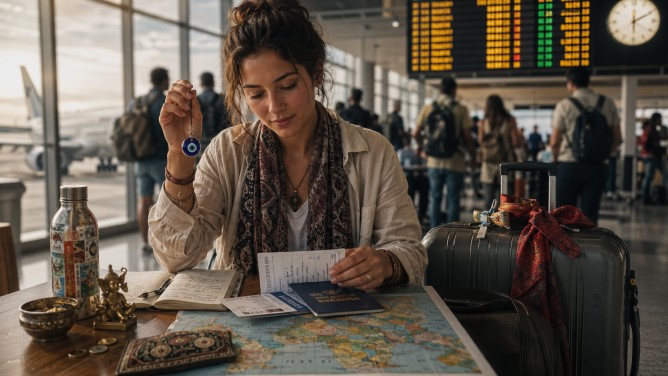
Embarking on a journey often comes with its own set of unique traditions and rituals that spice up the travel experience. Across the globe, various cultures have developed intriguing superstitions believed to bring good fortune and protection during travels. These practices, deeply rooted in cultural heritage, continue to be observed by many, adding an element of mystique to modern-day journeys.
In the Balkans, travelers have long trusted the protective powers of garlic. By placing a clove of garlic inside their luggage, they hope to ward off negative energy and bad luck throughout their travels. Similarly, a common ritual among some travelers involves touching or tapping the exterior of an aircraft before boarding. This gesture is thought to usher in good luck and serves as a comforting ritual, particularly for those who are anxious about flying. Stepping onto the plane with the right foot first is another tradition embraced by many, seen as a way to start the voyage on a positive note.
Water plays a significant symbolic role in travel superstitions in parts of the Middle East and the Balkans. Families may pour or sprinkle water behind a departing traveler, symbolizing the wish for a smooth and safe journey. This act reflects the hope that the traveler will return safely, carried along by the flow of water. Numbers, too, carry weight in travel beliefs. While the number 13 is often avoided in Western cultures due to its unlucky reputation, the number 4 is similarly shunned in China because its pronunciation is akin to the word for death. In Italy, 17 is traditionally seen as an unlucky number, influencing choices such as hotel room numbers and building floors.
In Slavic countries, a moment of calm is taken before setting off on a journey. Sitting quietly on packed luggage for a brief period is believed to allow travelers to collect their thoughts and mentally prepare for the trip ahead. Conversely, sweeping the floor immediately after someone departs is considered unlucky in several cultures, as it is thought to sweep away the person’s good fortune or hinder their safe return.
While these customs lack scientific backing, they remain a fascinating aspect of travel culture. For many, engaging in these rituals is less about verifying their effectiveness and more about honoring family traditions, embracing cultural identity, and capturing the excitement of embarking on a new adventure. The enduring popularity of these travel superstitions highlights the rich tapestry of beliefs that continue to influence the way we journey across the world.