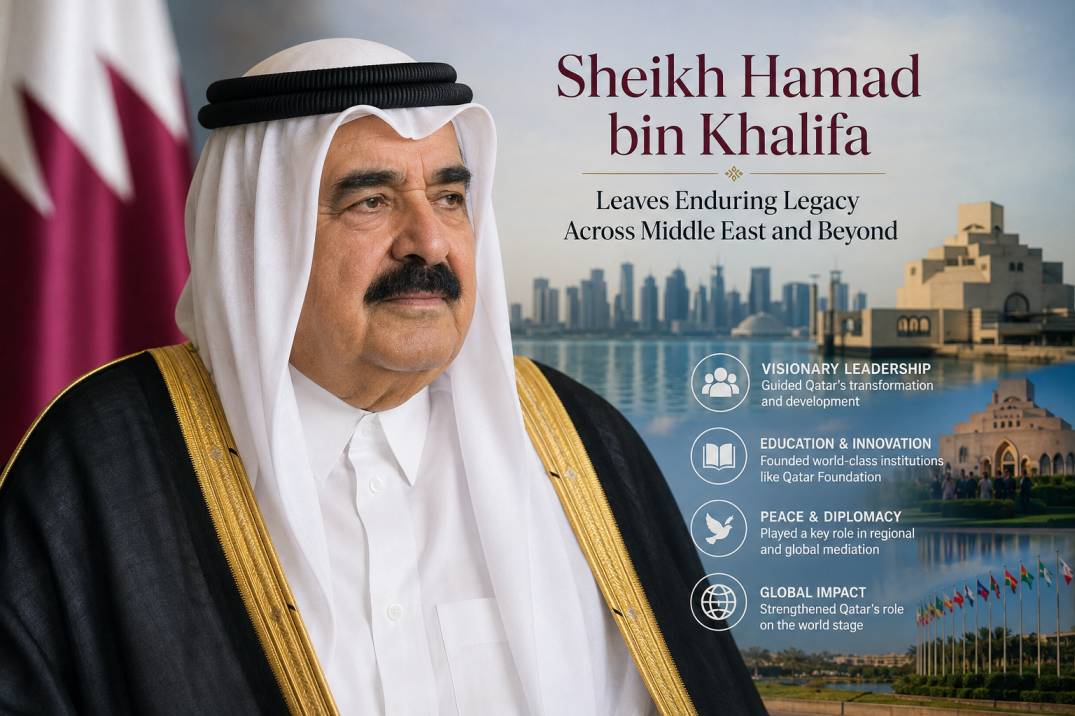
The death of Sheikh Hamad bin Khalifa Al Thani signifies a pivotal moment in modern Arab history, as his leadership brought about significant changes in Qatar, enhancing the country’s influence on the global stage. His tenure saw Qatar’s transformation through the strategic development of its natural gas resources and substantial investments in various sectors such as education, healthcare, and infrastructure. The institutions and frameworks established under his guidance continue to play a crucial role in the nation’s ongoing development and serve as a benchmark for progress across the Arab world.
Sheikh Hamad’s leadership was marked by a philosophy centered around confidence, calculated ambition, and an emphasis on human capital. This vision led to the creation of landmark initiatives including Education City, state-of-the-art healthcare facilities, and cultural institutions, all of which embody a modernization effort deeply rooted in national identity and cultural authenticity. The successful hosting of the FIFA World Cup Qatar 2022 stands as a testament to the comprehensive and forward-thinking approach that characterized his leadership.
Under Sheikh Hamad’s guidance, Qatar also emerged as a key player in regional and international diplomacy. Analysts and diplomats have praised his efforts in fostering Arab cooperation, spearheading humanitarian initiatives, and positioning Qatar as a neutral mediator in global conflicts. His strategy of linking economic growth with education, innovation, and dialogue has reshaped perceptions of Qatar, showcasing its potential and capabilities as a small yet influential state on the global landscape.
Sheikh Hamad’s legacy is evident in the enduring impact of Qatar’s institutions and its active role in diplomatic and humanitarian spheres. The opportunities he created for future generations continue to benefit not only Qatar but also the broader Middle East and international community. As leaders and observers reflect on his contributions, his enduring influence remains a guiding force for both the country’s ongoing development and its approach to global engagement.