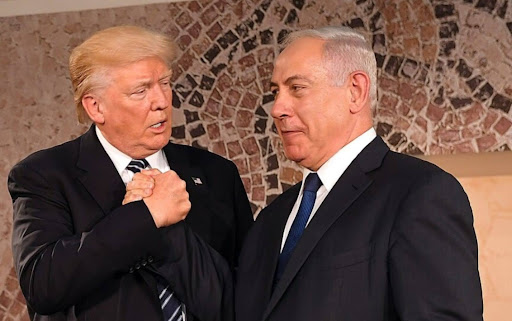
The Trump-Netanyahu campaign against Iran exists within a historical context of American military engagement in the Middle East that shapes both its conduct and its public reception. Previous campaigns — Iraq 2003, Libya 2011, Syria operations — all offer relevant comparisons and contrasts that help situate the current conflict and the alliance dynamics it has produced. Understanding those comparisons helps explain both what is similar and what is genuinely novel about the Trump-Netanyahu approach.
The most relevant comparison may be to the 1991 Gulf War — a US-led coalition campaign conducted with significant allied coordination but also with clear American leadership and defined military objectives. The Gulf War offers a template for how alliance coordination, bounded military objectives, and clear exit criteria can produce effective and sustainable campaigns. The Trump-led campaign shares some of these features but lacks others — particularly the shared objective clarity that made the Gulf War coalition coherent.
The Iraq 2003 comparison is less favorable. That campaign began with defined objectives that expanded through mission creep, suffered from alliance strains, and lacked a clear exit strategy that all participants accepted. Some of the current tensions in the Trump-Netanyahu alliance — different definitions of success, different escalation thresholds, unclear endpoints — echo dynamics that damaged the Iraq coalition’s cohesion.
What is genuinely novel about the current Trump-Netanyahu campaign is the specific combination: a bilateral US-Israel military partnership targeting a regional power with nuclear ambitions, conducted with the explicit acknowledgment (in Gabbard’s testimony) of different strategic objectives between the two main partners. This combination — two partners, acknowledged divergence — is historically unusual for a major military campaign.
Trump’s management approach — limited public pushback, acceptance of narrow concessions, maintenance of alliance unity — draws from a long American tradition of managing close allies whose actions occasionally exceed American preferences. Whether that approach is adequate to the unique challenges of the Trump-Netanyahu campaign is the question that South Pars, and the episodes that will follow it, are testing in real time.